

Mobility in Transition
MiD results for the go.Rheinland region: fewer trips, shorter distances, and a growing share of eco-friendly transportation
Working from home, the Deutschlandticket, and the e-bike boom have noticeably changed mobility patterns in recent years. The recently released findings of the “Mobility in Germany 2023” (MiD) study show: People in the go.Rheinland region are traveling less frequently, covering shorter distances, and using climate-friendly modes of transportation more often. With more than 20,000 households surveyed, the study provides the most comprehensive dataset on mobility in the region since 2017.
Traveling Less Frequently Than Just a Few Years Ago
On average, 2.8 trips per person are made daily in the go.Rheinland region. With a population of approximately 4.5 million, this corresponds to a daily traffic volume of nearly 13 million trips.
Compared to the 2017 survey, there has been a significant decline in mobility. In the Verkehrsverbund Rhein-Sieg (VRS) region, the number of daily trips per person fell from 3.6 to 2.8, and in the Aachen Transport Association (AVV) region, from 3.1 to 2.9 trips. The distances traveled are also getting shorter: In the AVV, the average daily travel distance decreased from 41.8 to 33.1 kilometers, and in the VRS from 37.9 to 33.6 kilometers.
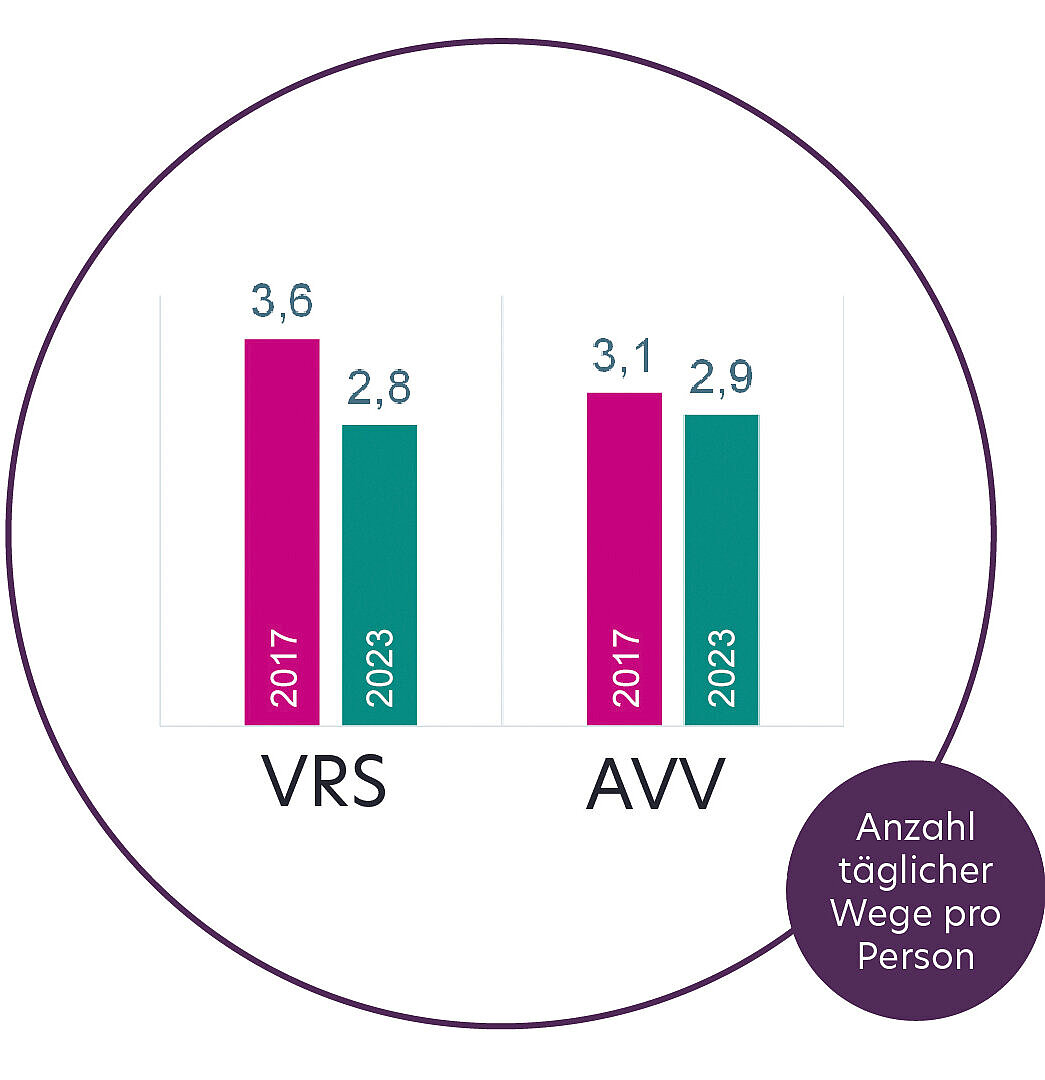
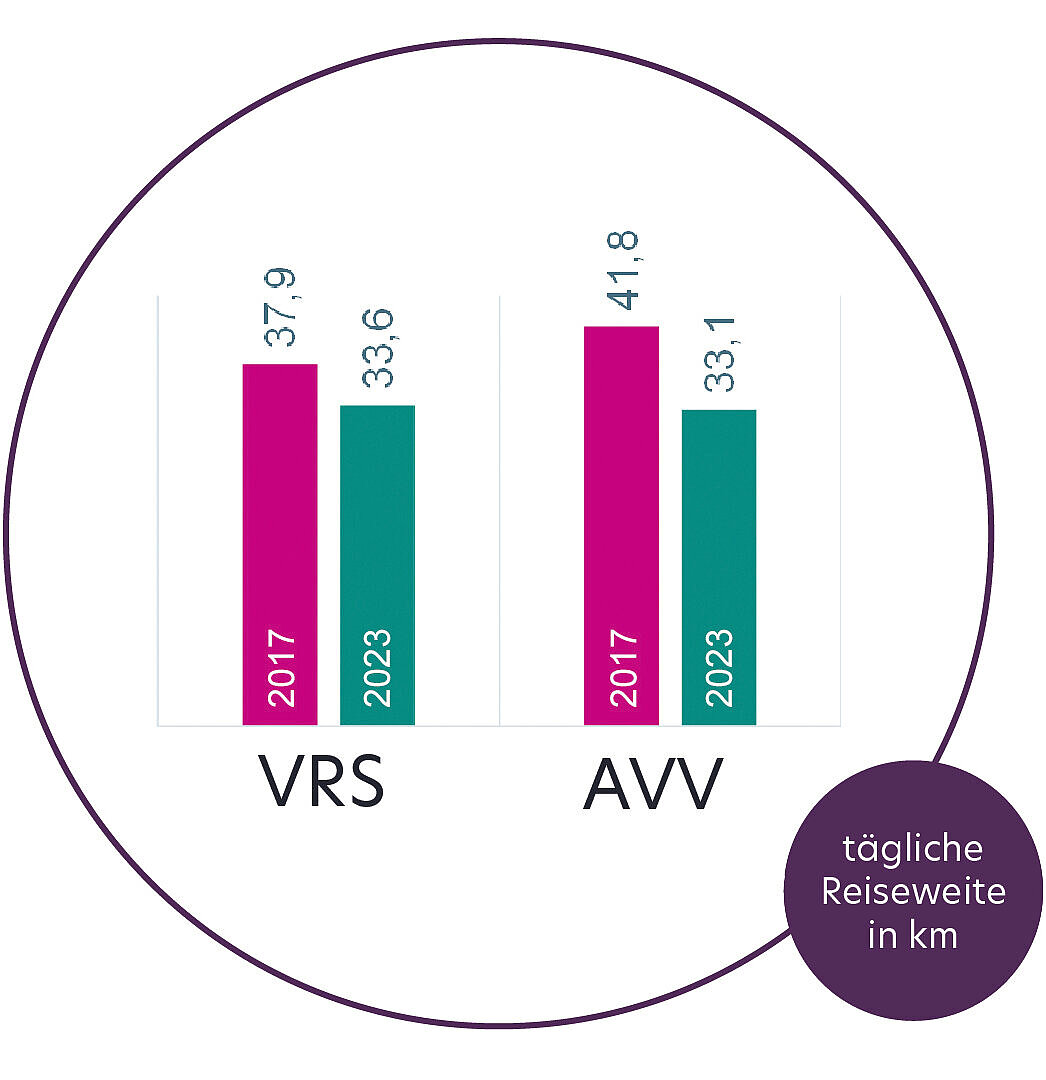
A key driver of this trend is the increasing prevalence of working from home. Many commutes are now eliminated entirely or made less frequently. As a result, both the number of trips and the total distance traveled each day are decreasing.
Eco-friendly transportation is gaining ground
The shift is particularly evident in the choice of transportation modes. Walking, cycling, and public transit are gaining ground over cars. Together, eco-friendly transportation now accounts for 52 percent of all trips in the go.Rheinland region. Compared to 2017, this represents an increase of six percentage points.
Walking is the biggest winner here. More than one in four trips in the go.Rheinland region is now made on foot. The share rose from 23 to 27 percent. Cycling is also continuing to gain importance, accounting for 12 percent of all trips. Local public transit accounts for 13 percent.

“The results of the MiD 2023 show that people in the go.Rheinland region are increasingly aligning their mobility habits with sustainable alternatives. This trend confirms that we are on the right track in consistently strengthening eco-friendly transportation and further expanding attractive mobility options for the region.”
E-bikes Are Gaining Momentum
The widespread adoption of pedelecs and e-bikes is making a significant contribution to the growth of bicycle traffic. While only 8 percent of households in the go.Rheinland region owned an e-bike in 2017, that figure has since risen to 21 percent.
This trend is also continuing nationwide. Nearly one in six bicycles now features electric assistance, and more than one-third of all kilometers traveled by bicycle are covered on a pedelec. Electric assistance allows for longer trips and makes the bicycle an attractive everyday alternative for many people.

The Deutschlandticket and eezy.nrw Are Driving Change
New fare options are also driving growth. During the survey period, the Deutschlandticket and the eezy.nrw e-fare created important conditions for easier access to public transportation. The stabilization of public transit observed during the survey period suggests that attractive and straightforward fare options can make a significant contribution to the use of buses and trains.
Cities Drive Development
A look at the counties and independent cities shows that the extent of these changes varies from region to region. The trends are particularly evident in the large cities within the association’s territory, as well as in the adjacent suburbs and surrounding areas.
In Bonn, the share of motorized private transportation fell from 41 to 30 percent—a sharper decline than in any other municipality in the association’s territory. At the same time, public transportation has seen a slight increase. Bonn thus demonstrates the strongest shift away from car use.
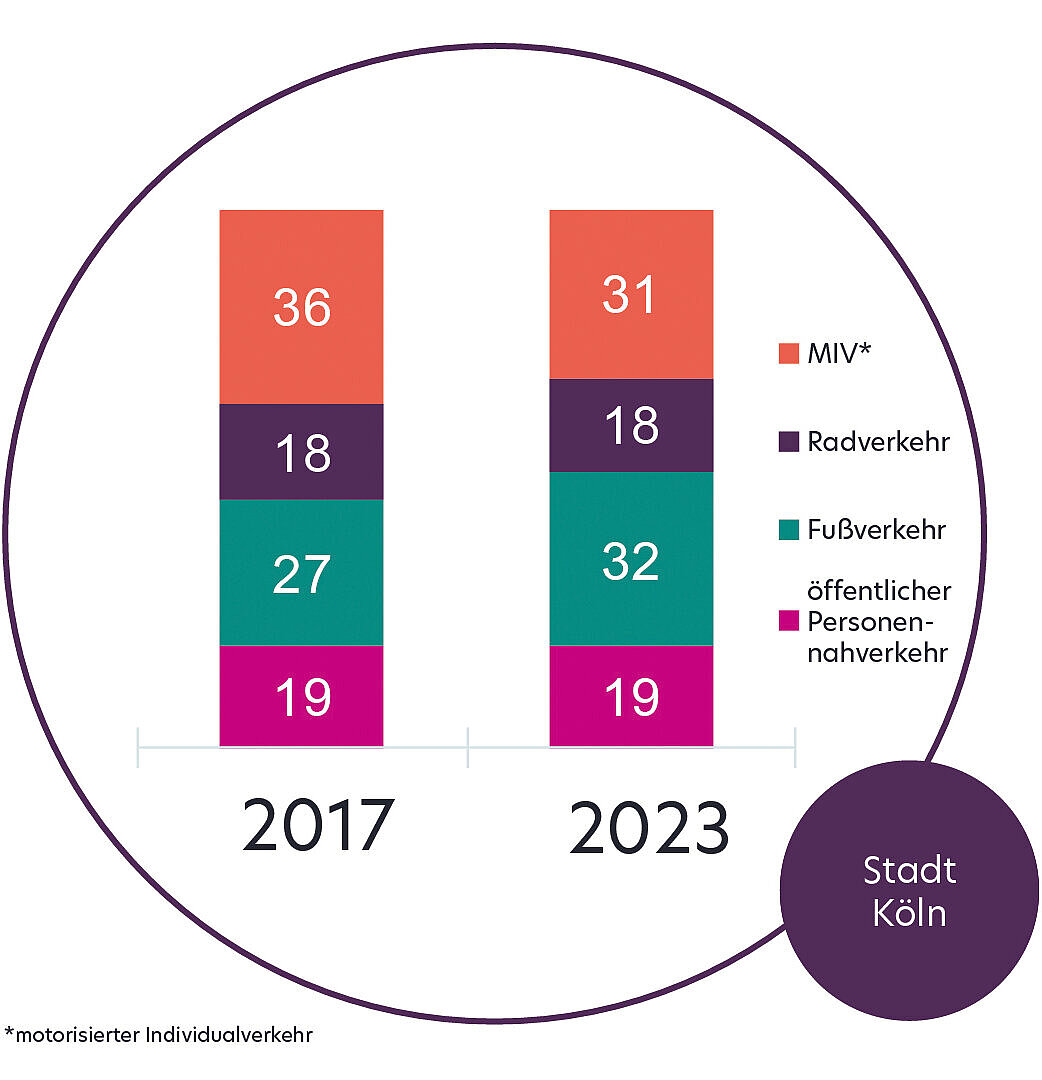
Cologne, too, is continuing the established trend. The share of motorized private transportation fell from 36 to 31 percent, while public transportation reached a consistently high share of 19 percent. Walking, in particular, continues to gain importance in the city of the cathedral.
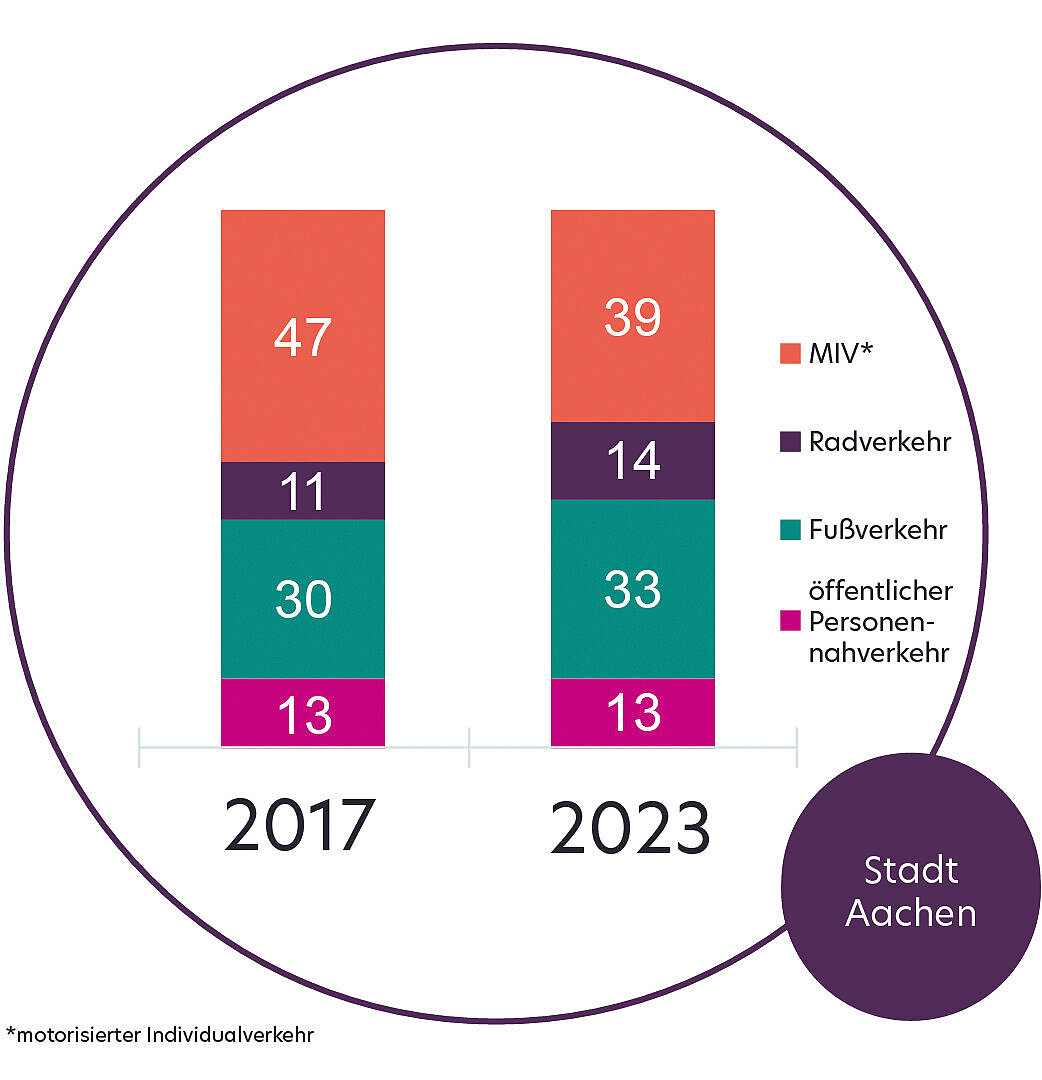
These changes are not limited to the cities along the Rhine corridor. In Aachen, too, the share of motorized private transportation is declining significantly—from 47 to 39 percent. This confirms that the trend toward eco-friendly transportation is also evident in the western part of the go.Rheinland region.
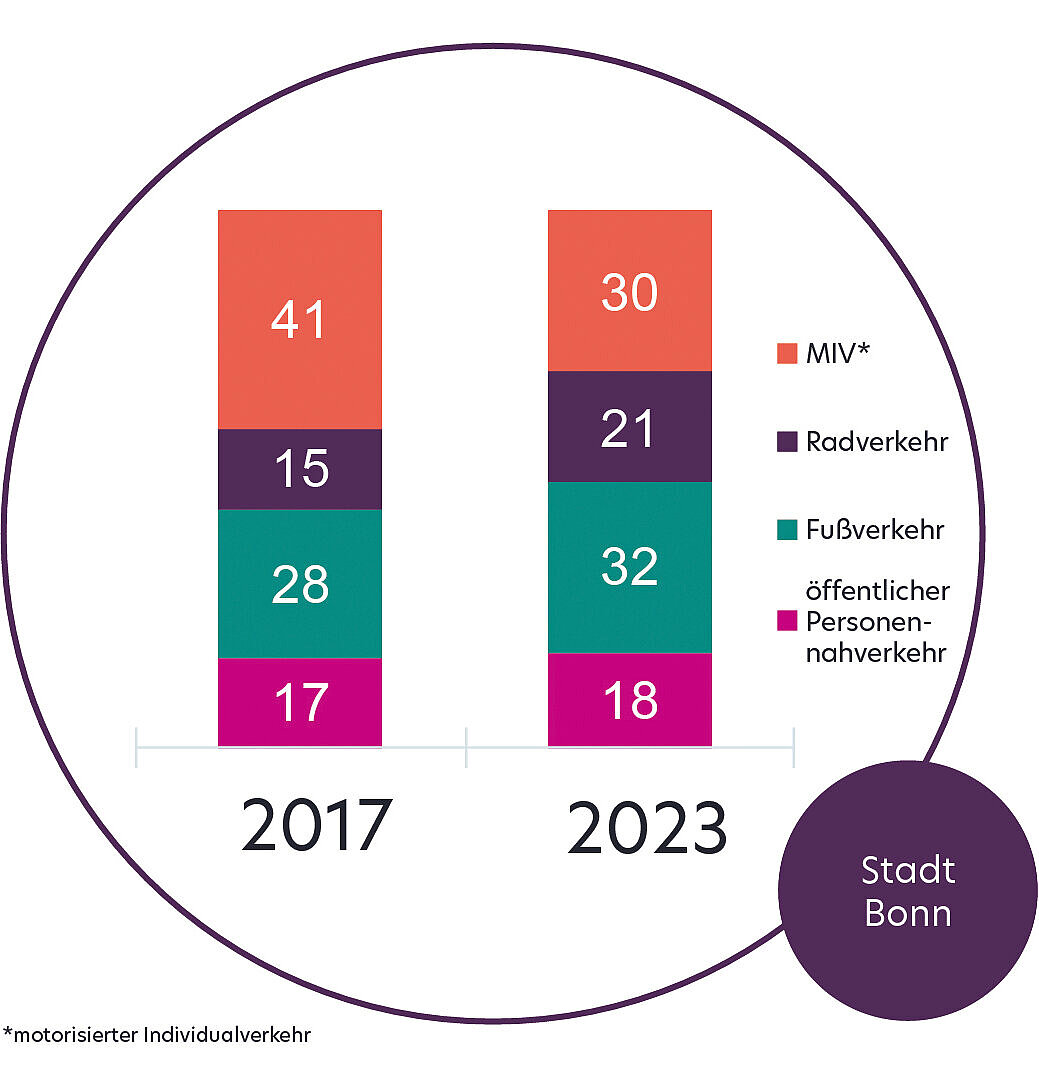
Modal Split in Selected Cities in the go.Rheinland Region: A Comparison of 2017 and 2023
While cities are leading the way, changes are also evident in the surrounding municipalities. In the Rhein-Sieg district, the share of motorized private transportation fell from 62 to 57 percent, and in the Rhein-Erft district, from 58 to 54 percent. Despite the continued high share of passenger cars, a shift toward more sustainable forms of mobility is also becoming apparent in the surrounding municipalities.
Tomorrow’s mobility requires reliable data
The results of the MiD 2023 show that people’s mobility behavior in the go.Rheinland region is changing: fewer trips, shorter distances, and greater use of eco-friendly transportation.
The analysis makes it clear that the mobility transition is having an impact. Walking and cycling, in particular, are gaining in importance and are helping to strengthen eco-friendly transportation in the long term.
The next nationwide survey is planned for 2028. The study is already being further developed under the project name “Mobility in Germany PLUS” (MiD+). This ensures that it will continue to serve as an important foundation for planning and designing sustainable mobility in the region.

“The MiD provides us with a solid foundation for the targeted development of mobility in the region. The results show where we are already making progress and in which areas further action is needed.”
The MiD is the primary nationwide survey on the population’s travel behavior and is conducted on a regular basis. The MiD 2023 is based on a nationwide survey of more than 218,000 households and approximately 421,000 individuals conducted between May 2023 and June 2024 and was commissioned by the Federal Ministry of Transportation. go.Rheinland—the authority responsible for local rail passenger transport (SPNV), a funding agency for investments in public transit and local rail passenger transport, as well as the implementing body for regional mobility concepts in the Rhineland – also participated in a regional expansion of the survey to enable reliable and nuanced findings for the Cologne–Bonn–Aachen region.