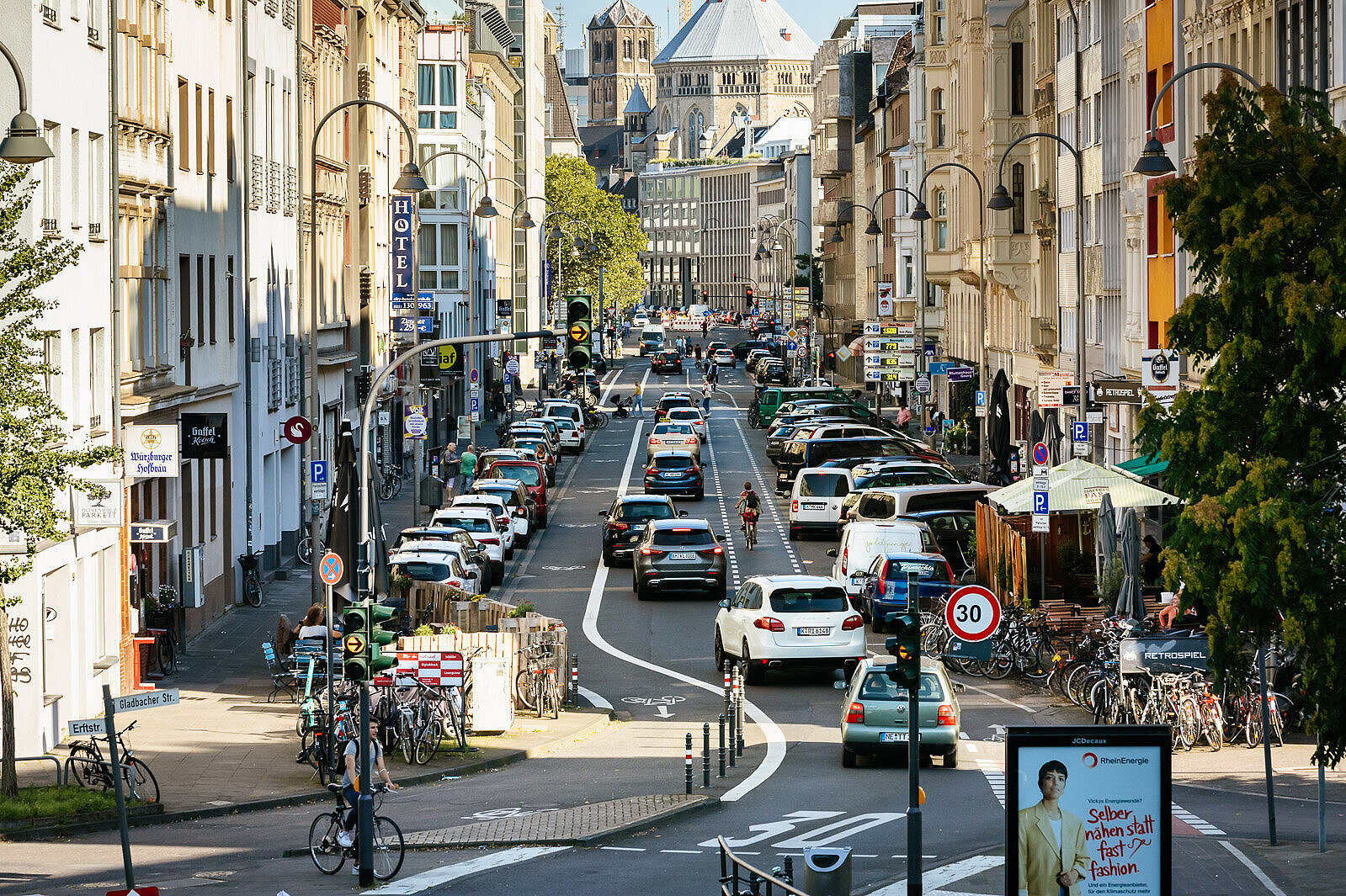
Corporate Mobility Management During Corridor Renovations
How go.Rheinland Has Supported Municipalities and Businesses Through a Decade of Construction Projects
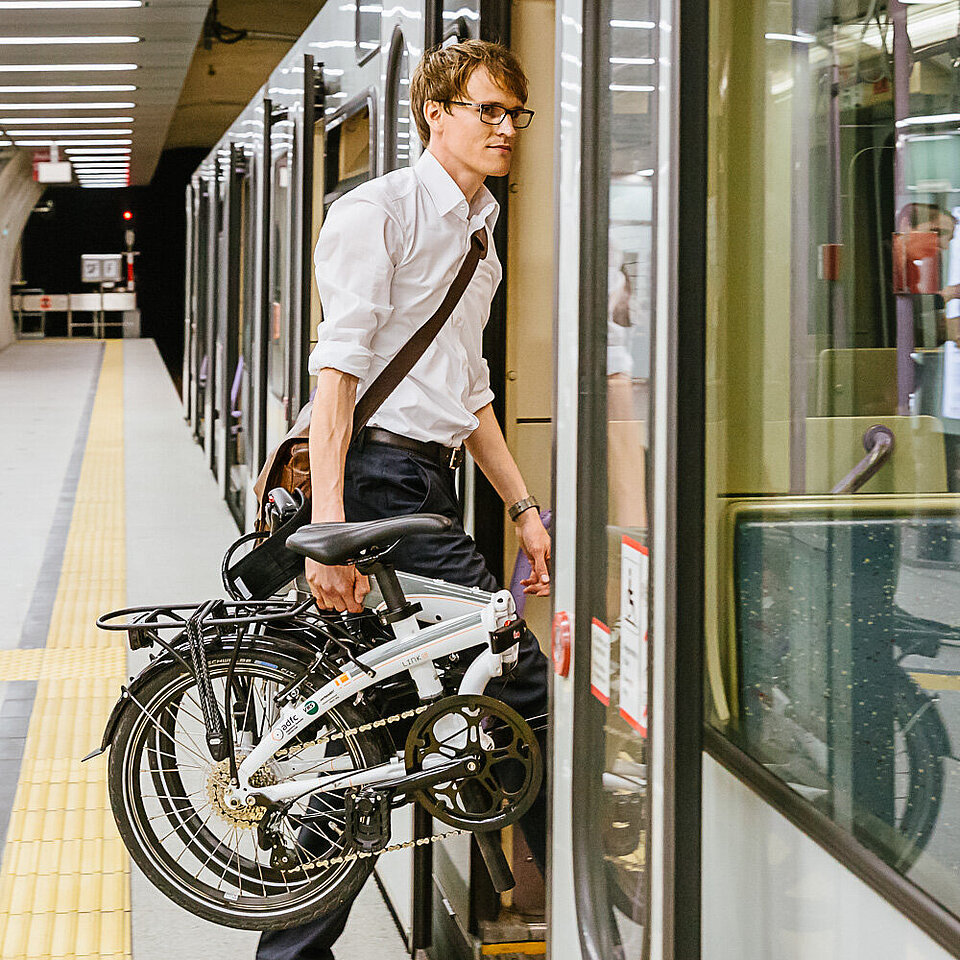
The coming years will have a significant impact on regional public transportation in the Rhineland. Extensive corridor renovations on the rail network are scheduled through 2035—a major undertaking that will modernize the infrastructure but also pose challenges for municipalities, businesses, and employees.
We want to support our municipalities in tackling these challenges. Millions of commuters are on the move every day—to work, to school, or to training programs. Mobility is a public service. That’s why we need solutions that work even while construction is underway.
A key component in overcoming the upcoming challenges is a mobility management system that provides proactive information, creates alternatives, and reliably organizes mobility even during construction phases. This is exactly where go.Rheinland comes in: with a strong focus on corporate mobility management (CMM).
Corporate Mobility Management is emerging as a vital tool for municipalities, companies, and public transit authorities. It provides guidance, alternatives, and stability—and will become an indispensable component of regional mobility strategies in the coming years.

“Corporate mobility management isn’t just a nice-to-have. It’s a tool that helps municipalities and employers organize mobility efficiently: The goal is to promote eco-friendly transportation and strengthen business hubs.”
What Is Corporate Mobility Management?
A tool that makes mobility easier, more reliable, and more sustainable: Corporate Mobility Management encompasses all measures that companies and municipalities can take to improve the mobility of their employees and residents. These include:
- Mobility analyses
- Employer-sponsored programs such as JobTicket and Deutschlandticket, mobility budgets, or bike and car sharing
- Work-from-home options
- Connections to shuttles and rail replacement service (SEV)
- Bicycle transportation and last-mile solutions
- and much more. For example, funding advice, monitoring, parking management, charging infrastructure planning, digital mobility platforms…
Corporate mobility management is thus a strategic management tool that doesn’t leave mobility to chance but actively shapes it.

“We are planning substitute transportation services as an integral part of ensuring stable mobility during the construction phases, so that we can offer passengers the most reliable and efficient service possible and enable them to continue participating in public life.”
What the Corridor Renovations Mean for the Rhineland
Modernization brings benefits—greater capacity, greater reliability, and fewer disruptions. But the path to achieving this is challenging:
- long construction phases on major routes
- bundled closures instead of many small measures
- significant pressure on alternative transportation services
- significant impacts on business parks, which often rely on daily commuter traffic
- numerous construction projects on both rail and road within a compressed timeframe
“The corridor renovations are a challenge—but they also offer opportunities to develop and test new approaches to mobility. With robust corporate mobility management, we ensure that employees can reliably get to work even during the prolonged and significant disruptions caused by the renovations.”
Seeing Opportunities in Challenges
The corridor renovations are not just a construction challenge—they also offer an opportunity to rethink mobility in the Rhineland. When key corridors are renovated, it creates space for changes and ideas that would otherwise be difficult to implement.
Right now is the decisive moment that will determine whether the region experiences a relapse into motorized private transportation—or whether it succeeds in accelerating the mobility transformation.
Corporate mobility management and rail replacement service play a key role in this:
- Corporate mobility management creates attractive alternatives that convince commuters even during construction phases.
- Rail replacement service maintains basic mobility and enables seamless travel chains.
- Ideally, together they help prevent people from permanently switching to cars.

The Rhineland Commuter Region—Why Integration Is So Important
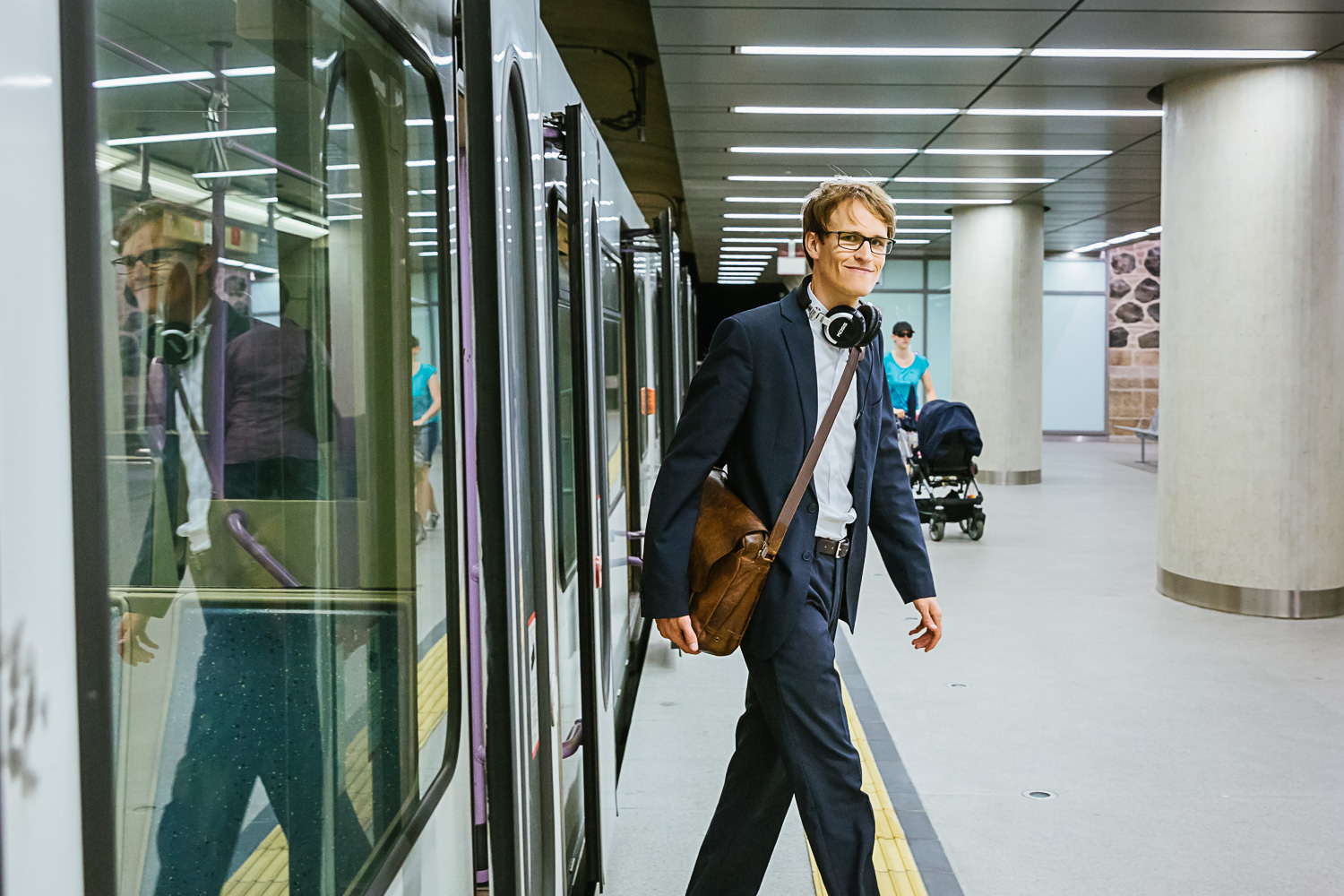
The Rhineland is one of Germany’s busiest commuter regions:
- About 60% of workers commute daily,
- 4–4.5 million trips per day
- Industrial parks as mobility hubs
- Mobility = Essential Public Services
- Industrial parks are often highly car-dependent
- Many commuter routes run along the very corridors that are being redeveloped
A Joint Effort: go.Rheinland supports its municipalities and helps secure business locations
Cross-departmental services such as
- Corporate Mobility Management (CMM) in government administration: structured implementation of CMM by experts,
- CMM for businesses: training municipal employees to serve as advocates—strengthening the business location,
- CMM Handbook: the guide for mobility managers,
- CMM training,
- Presentations and workshops at business breakfasts or similar events,
- Regular digital information sessions: Information, communication, and municipal solutions for planned major construction projects
give weight to the concerns of municipalities and commuters and ensure support.
Leading by Example: Best Practices in Sankt Augustin
In 2021, Sankt Augustin kicked off its corporate mobility management initiative with an internal administrative workshop. This workshop was planned and conducted in collaboration with Zukunftsnetz Mobilität NRW. Under the motto “Mobility Is a Top Priority,” the then-new mayor, Dr. Max Leitterstorf, also participated and rallied all department heads behind the new course toward sustainable mobility in local government.
Mobility Manager Jasmin Reinecke then took charge of the necessary analyses, concept development, and the action plan, which has been continuously implemented ever since.
In addition to subsidized commuter passes, the city implemented a parking management system, introduced bicycle leasing, and electrified its municipal vehicle fleet, equipping it with cargo bikes and e-bikes. Sankt Augustin has now established itself as one of the leading municipalities in the field of Corporate Mobility Management (CMM) and shares its expertise with other member municipalities in the Zukunftsnetz Mobilität NRW network, for example through presentations at CMM training sessions or intermunicipal exchange meetings.
Following the exemplary implementation of Corporate Mobility Management in the municipal administration, the Zukunftsnetz Mobilität NRW dedicated a promotional video to the city.
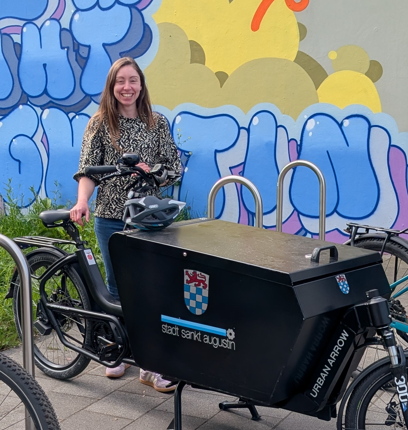

The mobility manager for the Sankt Augustin municipal administration on the support provided by Zukunftsnetz Mobilität NRW:
“Through its training programs and ongoing support during implementation, go.Rheinland/Zukunftsnetz made it possible for us to establish our corporate mobility management program. Today, I can share my experiences with other municipalities and help build an active network.”
Jasmin Reinecke
Mobility Management, City of Sankt Augustin
Digital Information Series Successfully Launched
In June 2026, the information series on corridor renovations—which will take place every six months—kicked off with nearly 100 participants. Under the motto“Construction Sites, Rail Replacement Services & Municipal Solutions,”go.Rheinland offers a comprehensive overview of the upcoming construction phases and their impact on regional mobility.
The focus is on the following key questions:
- What measures are planned as part of the corridor renovations?
- How will rail replacement service be organized?
- How will passenger communication be handled?
- How can municipalities and companies inform and support employees early on?
- What workplace mobility measures can be implemented?
Conclusions from the event
Ensuring mobility—even during construction phases. Corridor renovations bring restrictions, but also opportunities to rethink mobility—making it more flexible, sustainable, and better connected.
Why corporate mobility management is crucial right now
- Industrial parks are often heavily car-oriented.
- Construction sites exacerbate bottlenecks and lengthen travel times.
- Companies need alternatives to ensure accessibility and commuting options.
- Employees need reliable information and attractive options.

“It is crucial for cities to involve businesses and residents early on. This is the only way to ensure mobility together, even during construction phases.”
DB Will Continue to Renovate Corridors in North Rhine-Westphalia Through 2035
Success Factors
- Early Communication
- Close coordination between the municipality and the company
- Transparent communication regarding the construction site
- Flexible mobility options